

In the week leading up to the 2026 Municipal Election, we will be featuring profiles for candidates running for Mayor in Niagara's three largest municipalities - St. Catharines, Niagara Falls and Welland.
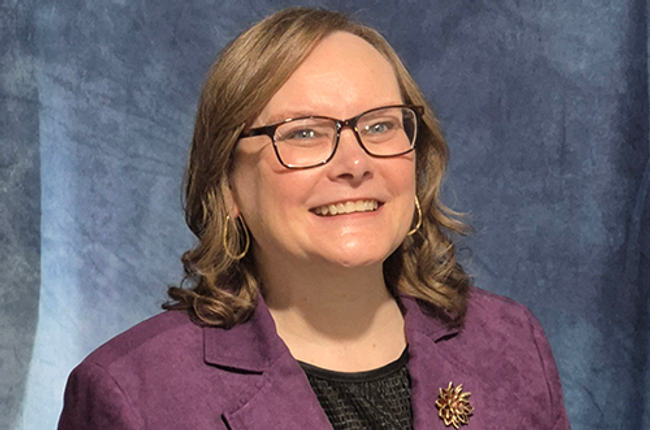
Today's profile is Lori Lococo, who is running in Niagara Falls. Lococo is a two-term City Councillor in Niagara Falls, who was first elected in 2018. A lifelong resident, she describes herself as passionate about serving the city she loves. She has served as Director on the Board of Project SHARE for 11 years, as well as on the board of The Soup Kitchen for three years.
What is the single biggest issue facing your municipality right now, and what is the first concrete thing you would do as mayor to address it?
The concern with most people is affordability. It all starts with the budget. And if we look at our budget and look at where we're spending the money, I don't believe we have a revenue problem. We have a spending problem. We spend money on things that we shouldn't or that are not our responsibility. They may be the region's responsibility, or they might be the province's responsibility, but they're coming out of taxpayers' dollars. And that's where I think we really need to start: at the budget. I have brought up a few suggestions during my term on council, and these are the suggestions and the way that I would like to see us move towards the budget. The first one is zero-based budgeting. It's basically starting from zero, starting from scratch, and going through all of the expenses, all of the programs, and evaluating them, justifying them to see if that's where we should be spending our money. Yes, we're spending money, but what is the result? What is the return on investment? How many people are being impacted by it? So, if we do that right from the beginning, we will be able to see where maybe they're not our responsibilities and another level of government should be taking them on. These are really important processes that we have to put in place. And that's the very first step of the budget analysis. The second part of it, for me, is reviewing our community improvement programs, our CIPs. We have a lot of different ones, and they either give tax incentives or waive fees for people and businesses to maybe improve the facade of a building or renovate the building. Most recently, we had a new CIP program come into place, and it was for the renovation of vacant apartments above commercial stores. And it worked really well in St. Catharines. They got a lot of new units put on the market. We need affordable units. We need more housing units. And this was a good way to do it. So we looked at that. And around the same time, we heard of a development in Welland. Welland invested $2 million and got 83 affordable units. That's a huge return on investment. So my question started becoming, well, we're putting money into something, we're investing, but what is the return? How are we getting those units on the market? So my question was about this new CIP program, and it was for downtown Queen Street and Main Street in Niagara Falls. We were going to spend $1.67 million for 2026, and it was three-point-something for 2027. So that's over $5 million, but we had no idea how many units. So we have to evaluate our investments to see what is the return on investment, what taxpayers' money is being used for, and what the end result is. So those are the things that it all starts with: the budget. And those will be the very first things that I will implement to address those concerns because affordability is a major issue. People are having a hard time paying bills and buying groceries. There's certain things that we can do at the city that will impact affordability. We can't affect grocery prices, but we can affect the amount of taxes that are charged. We can affect the amount of services or fees for certain things like water, recreational fees, arena fees, those types of things. So we really have to analyze all of that.
Property taxes are a major concern for many residents. Is it difficult to keep taxes affordable with the need to maintain roads, infrastructure and municipal services?
It is. Everything starts with the budget, and it's hard to balance everything. And that's one of the things that I found as a councillor. A lot of times, we were looking at one project and we would make the decision. And I have always suggested that we review our strategic priorities and look at all of the expenses as one, because in your household, you look at the money that's coming in, and then you look at the choices about where you can spend it. Sometimes at the municipality, we don't have that opportunity, or it is not given to us. We have to look at things as a whole. And if we don't look at things as a whole, we might be spending money where we shouldn't be, when maybe the things that we should be spending money on, like infrastructure, roads, sewers, bridges, and buildings, need to come up a little higher on the priority list. I will say, over the past couple of years, we have put a lot more money into infrastructure, A, because council decided that was the direction they wanted to go, but also because the Premier has mandated an asset management plan that forced all municipalities to look at their infrastructure and analyze its condition, how much it would cost to repair or replace it, and what its life cycle is. So, all municipalities - they say municipalities are not great stewards of their property - and it's just because there are competing interests for the money. But the province has put this in place, so I think we're on a better track to take care of our infrastructure. It's not to say that we can't do better, but again, we have to look at the priorities: what is necessary, what are the expectations of our residents, and what is our mandate, our municipal mandate. If we're spending money on regional and provincial mandates, we don't have enough money to cover the municipal mandate.
Niagara continues to grow. How should your municipality handle new development and housing while making sure infrastructure and services can keep up with that growth?
Development is a double-edged sword. We are given targets from the province of what we need to achieve. Sometimes I do think that they are too aggressive. I think that development needs to be thought out, well planned, and reviewed against the existing infrastructure that we have. We have a lot of older infrastructure that needs to be replaced and repaired. So if that needs to be replaced and repaired, it's very difficult to be adding new growth when the current infrastructure can't handle it. A good example is the south wastewater treatment plant. If we don't get that south wastewater treatment plant, we can't build new houses. Especially out in Chippewa, that's where a lot of the growth is happening in the south end. There are a lot of people who already have issues with flooding, flooding toilets and sewers, and flooding in their yards and in their basements. If we're already having those issues, putting more growth in without the proper infrastructure is going to be very challenging. Our city signed a pledge of 800 new units for the next 10 years, 8,000 units. I do believe that that is too aggressive. We've also looked at urban boundary expansions. I did not support that, but we have three new urban boundary expansions. When you do that, now you have to pay for the infrastructure to go all the way to those new urban boundary expansions. That's very expensive. That's new roads, not just the roads, but all of the infrastructure below them: the sewers, the water pipes, and wastewater. You're looking at all of that cost that has to go out to that, and that's a cost to the taxpayers. Now, the flip side of this is development should pay for development. There are charges called development charges, and when a developer comes in, they pay development charges. Then the city uses those development charges to pay for extra things like libraries, new roads, repairing roads, and new arenas. We use those development charges. Most recently, the province has said to municipalities that if you reduce or remove the development charges, the province will give you the money instead. So a lot of municipalities signed up for this new agreement. We're just starting out on it, so we don't really know: are we going to get the money that we would have gotten through the normal development charges from the developer? And if we don't, who's paying for it? It's the taxpayer. So I'm very cautious about this, and I want to see how this is going to work out. Most recently, I've heard that the province - and it's not confirmed, but I've heard it from numerous sources - has said to the region that if the region reduces or eliminates its development charges, the province would put its portion in for the new wastewater treatment plant because we can't build without that. So again, will we be getting the money to make us whole from what we would have received under the old development charges program? I'm not sure. It's too early to say, but we have to be cautious about it.
What do you believe Niagara's municipalities and the Region should be doing differently together, and what would you personally do as mayor to improve regional cooperation?
At the region, we're going to be changing our regional structure, and no one really knows the structure that we're going to be going to. There's a lot of conjecture out there and a lot of different models. Collaboration is one of them. The way that the structure is set up is that each individual municipality will now have one person. Before, Niagara Falls used to have four people at the table: three regional councillors and a mayor. That was four different perspectives, and they could vote the same way or they could vote differently. But at least you had four different types of experience, knowledge, and perspectives, depending on who they were speaking to. Now you just have the mayor. So people want to ensure that the mayor they're voting for will be a voice for everyone and not just a select sector or group. The collaboration then becomes, if we have 12 municipalities, each municipality will be trying to get the best for their municipality, but we're also part of a region. So I've heard some talk about an agreement between the municipalities. It would ensure that the top three municipalities, being St. Catharines, Niagara Falls, and Welland, can't control what is going on, leaving the smaller municipalities to follow whether they want to or not. I've heard about an agreement. I don't know what the agreement is. I think a lot of things need to be worked out right now, and we're at a loss as to what the format is going to be. But anybody sitting at that table should have two things in mind: how does it best represent their municipality, and how does it best represent the whole region? And we have to work together. Leadership is a very high-level skill that people will need to be working on at the region in order to listen to each other and understand: is it for the greater good or is it for your own good? We need to listen to all of the different municipalities because municipalities have different needs. Some of them have more agricultural needs. Some of them have tourism needs. Some of them are very small and can't afford some of the regional services. So how does that impact everybody? This is going to be a very pivotal time at the region, and everyone needs to be on board with the same goal.
If elected, what is one thing you would change about how your municipality operates that residents would actually notice within your first year?
I'll go back to the budget. I believe that analyzing and justifying the budget and putting those processes in place will be the first one. The second one would be the tone at City Hall. I have talked to so many people who feel like they're falling through the cracks, that they're not being heard, listened to, or respected. I want to change that. I want everyone to feel that they are part of the city, that they're proud to live here, and that we're listening. I know that a lot of politicians say that, you know, we listen, we're here to serve you. That's nice to say. But when you receive email after email, messages, and phone calls saying, "You know, I've talked to City Hall. I was on the phone for 40 minutes and nobody got back to me. I got disconnected. So-and-so said they would get back to me," that's not good customer service. We need to improve our customer service. I know we've just had an improvement in our customer service, but a lot of people are saying it's worse than it was before. So I think we need to change that part of it, and communication with our residents is going to be a very high priority for me. A lot of times, we think that if we post something on a website or post something on social media, then we've done our job. It's not enough just to do that. We have to reach out to the community members who are not on the internet. And I know at this day and age we think, "Oh, who's not on the internet?" We do have a high population of seniors who do not have internet access or a computer, and they're feeling very left out. We do post things in the Niagara Falls Review. Not everybody gets the Review. We have to have a better communication strategy and a better opportunity for people to give their opinions and feedback. People are feeling that we only ask for feedback and then go and do whatever we want, or we ask for feedback after we've already made a decision. Again, that's not the tone of leadership that I want to have at City Hall.
Four years from now, what do you want residents to be able to point to and say, "That's what this mayor accomplished"?
I'm going to go back to the same two: affordability and a respectful kind of leadership. Those are the two things that I want people to evaluate me on, and I believe those two will affect every single resident within our community. About affordability, can they afford to live here? There are so many people who want to come to Niagara Falls or stay in Niagara Falls, and they just can't afford to stay here. Our taxes are very high. I know it's been said that we're one of the lower ones. They're still high, and it's challenging to live in a community where you might have an opportunity to go somewhere else because it's cheaper. I don't want people to be put in that position. I also want to have a whole new concept about diversifying our economy. We live in a tourism industry, and it's very important for our community. We need to nurture that. But not everybody's going to work in the tourism industry, nor should they, because, as we saw during the pandemic, we have to diversify and get different types of jobs here. So my thought on that is that I'll be working with the Economic Development Department to work on getting different types of jobs to keep people here. We often have students who live here, get their education, and then don't come back because there's nothing here for them. We have to change that. A couple of things that council has been working on include purchasing 240 acres for an industrial complex. That's really important because if we do have large companies that want to come here, they want large pieces of land, and we just didn't have that land. Some of the challenges are, yes, it's outside of the serviced area. How will it get serviced? What is the cost? When will that happen? Those are all things that we have to deal with. But a lot of times within municipal politics, you have to plan for the future because you can't just say, "Oh, we need 240 acres of land today," and then not have planned for it. So there are some things that City Council has already done to move us towards that. We also have to look at keeping our residents here, ensuring they can afford to live here and enjoy living here. And the other part of that enjoyment is having a good quality of life, having different programs for them, and having safe and clean streets. That's a big one for a lot of people. They feel that the city has changed in the last decade, and it's not the city they want to stay in. So we have to move the needle on that and get everybody on board. Leadership, for me, is collaborative. It is open and inclusive, and I want people to feel that they're all part of that.
Lococo is one of five candidates running for Mayor in Niagara Falls, alongside Jim Diodati, Michael Lucid, Paul Manning and Kevin Martineau.