

In the week leading up to the 2026 Municipal Election, we will be featuring profiles for candidates running for Mayor in Niagara's three largest municipalities - St. Catharines, Niagara Falls and Welland.
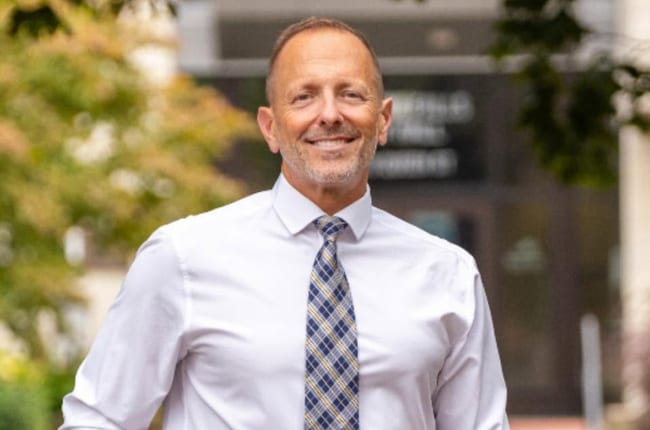
Today's profile is Jim Diodati, who is running to be Mayor of Niagara Falls. Jim Diodati has served as mayor of Niagara Falls since 2010, when he defeated incumbent Ted Salci. Before becoming mayor, he spent seven years on city council and has also served on Niagara Regional Council. Diodati is a longtime entrepreneur who operates an online health and wellness business. He’s also active in the community, founding the “Sleep Cheap, Charities Reap” fundraising event, which has raised more than $1.8 million for local charities.
You've been talking to a lot of residents throughout the campaign, what's something you're hearing about the most, and what would you do if re-elected to help address that?
It depends on the house, the neighbourhood, and the different issues that are important to people, but some concerns never change. One of them is taxes. Nobody likes taxes. Nobody likes paying them. Nobody says, "Thank you for taxing me." So, I guess the first thing I would say is that we have to educate the public and let them know that, while we collect taxes at the municipal level, we're also collecting on behalf of the school boards and the Niagara Region. In fact, two-thirds of the taxes we collect through the municipality go to the school boards and the Region of Niagara. That means we have a direct impact on only one-third of the taxes collected in the city, and we've been pretty darn responsible. Of the four major cities in the region, we have the lowest taxes and the best services. We've rehabilitated 50 of our parks, and we've done more in terms of community amenities. We've got more pools, more splash pads, more pickleball courts, and more trails. We keep reinvesting in the community. We've got the new Chippewa Community Centre and a lot of other major investments, and we still have very reasonable taxes in Niagara Falls. We're going to continue to keep our eye on the ball, with the goal of keeping tax increases at or around the rate of inflation. I know some people say, "Well, you should get to zero." The only way to do that is to cut services or cut things, because everything goes up. Wages go up, fuel goes up, and everything the city does becomes more expensive. If you don't keep pace with inflation, you're going to fall behind one way or another. So, the main thing is to keep our eye on the ball and be responsible. We don't want to price people out of their homes. If there's one thing I'd say to newly elected officials, it's this: Keep your eye on the ball and know the difference between needs and wants.
Property taxes are a major concern for many residents. Is it difficult to keep taxes affordable with the need to maintain roads, infrastructure and municipal services?
There's no question. It's not easy, because you have to ask yourself, "Do I need this, or do I want this?" People want to love living in their city. They don't just want to exist. They want to visit parks connected by trails that link neighbourhoods, and they want to feel like they belong. To achieve that, you have to offer these services. It's almost like a club or gym membership, but you get access to so much more. Collectively, as a city, we own everything. We own the community centres, the seniors' centres, the gyms, the trails, the parks, and the roads. We own it all. I think people want to live in a place they can afford and enjoy. In Niagara Falls, tourism is a major advantage. We are the number one leisure destination in Canada, bringing in 14 million tourists. That has two major benefits. First, it creates economic opportunities that help offset the residential tax base, because commercial properties pay more than residential properties. That helps keep taxes lower and creates jobs for everyone. For virtually everyone who grew up here, having a job in tourism was a common experience. There are so many opportunities in the tourism industry. The other major benefit is that, by living in a city like this, you get world-class amenities in a smaller community. We have entertainment venues like the OLG Stage and the Avalon Theatre, great restaurants, and really cool attractions. You don't have to go to Toronto, Buffalo, or New York to experience them. So, in Niagara Falls, we kind of get to have our cake and eat it too.
What do you believe Niagara's municipalities and the Region should be doing differently together, and what would you personally do as mayor to improve regional cooperation?
Well, I want to eliminate that layer of government. We don't need regional government, but we do need regional services. About 25 years ago, the province eliminated regional governments in some areas and created single-tier municipalities. Here in Niagara, we're still a two-tier system. The province made that change in Toronto, Hamilton, London, Windsor, and Ottawa, but for some reason, Niagara was overlooked. The problem is that it creates an extra layer of bureaucracy, red tape, and cost. When you look at places like Hamilton, which is probably the closest comparison, they're represented by far fewer politicians. We had 126 municipal politicians in Niagara, compared to just 16 in Hamilton. Hamilton has a larger population, a bigger budget, and lower taxes. There are significant opportunities to eliminate duplication. Now, the Premier has eliminated regional councillors from regional government. That's step one. Going forward, the regional council will consist of just the 12 mayors. Our job will be to dismantle the bureaucracy. We're not going to get rid of frontline services, but we need to eliminate the red tape. That's going to be my main focus moving forward.
If re-elected, what is one thing you would do that residents would actually notice within your first year?
Well, the first thing I want to do - and I've got to tackle more than one thing - is push aggressively for some key priorities. I want to get a hospice opened in Niagara Falls. That's a key priority. It's wonderful that we have hospices in other communities, but Niagara Falls is the second-largest city in the region and should have its own hospice. The GO Train is another priority. We have three trains a day, and I'm grateful for that. When Brian McMullen and I were able to bring GO Train service to Niagara Falls, it was a real game-changer. But moving to hourly service would take it to the next level. It would benefit people who work throughout the Greater Toronto and Hamilton Area, as well as students attending schools there. People could continue living in Niagara while commuting to those jobs and educational opportunities. Hourly service would be a really big deal. The other priority is our airport. We've got the Niagara District Airport, and we're the largest population centre in Canada without regular, scheduled daily flights. Much smaller communities, including places like Kelowna and Mont-Tremblant, have them. We're working with the provincial government right now to extend the runway by 3,000 feet. That would allow us to fly from Niagara to just about anywhere. It's never going to be like Pearson or Billy Bishop, but adding even one flight per hour would be a game-changer for people here who want to travel to Vancouver, Montreal, Florida, New York, or elsewhere. It would also be a huge boost for economic development in Niagara. Right now, unless you own your own plane, you have to drive here. By improving our transportation infrastructure, we'll be much better connected, which will help us attract more good jobs and make the region more successful.
Four years from now, what do you want residents to be able to point to and say, "That's what this mayor accomplished"?
I think anyone who knows me knows that I bleed Niagara Falls. Nobody loves this city and its residents more than I do. I love that this is my legacy, having given the best years of my life to this community. I went through a lot during my term, from cancer to COVID and all sorts of other major challenges. Now, we're dealing with Trump. With 85 per cent of Niagara's exports going to the United States, we need to keep our eye on the ball. We need people with business experience. I want people to say, "You know what? He planned his work and worked his plan. He did everything he said he was going to do, and then some." That's what I want people to remember: I didn't come here looking for what I could get. I came here to show what I could give and deliver for the residents. I've said this before: Never underestimate an unreasonable mayor. Persistence is the key to getting things done, along with building good relationships. If you focus on those two things and provide good customer service, I think people will ultimately say, "Well done."
Diodati is one of five candidates running for Mayor in Niagara Falls, alongside Lori Lococo, Michael Lucid, Paul Manning and Kevin Martineau.