

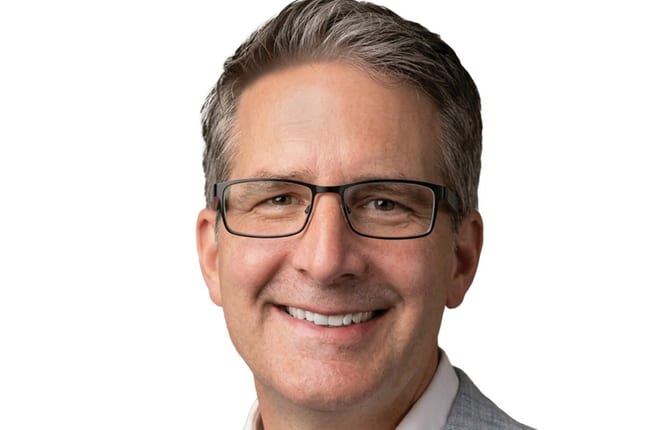
In the week leading up to the 2026 Municipal Election, we will be featuring profiles for candidates running for Mayor in Niagara's three largest municipalities - St. Catharines, Niagara Falls and Welland.
Today's profile is Graham Speck, who is running for Mayor in Welland. Speck is a two-term Ward 5 councillor in Welland coming into this election, who says he is not happy with the direction of city hall over that time. He's the owner of Speck Industries Incorporated, a screen printing company in Welland, and a representative on the Welland/Pelham Chamber of Commerce, as well as a member of the Downtown Welland BIA Board.
What is the single biggest issue facing Welland right now, and what is the first concrete thing you would do as mayor to address it?
Obviously, in my platform, I'm very big on our tax situation here, and I've heard it more and more from people at the doors. The tax increases - I did a calculation of the increase in spending at City Hall. It's been approximately a 6% increase in spending because, of course, we had assessment growth piled into that. So not only was there new money, people will ask, why have my taxes continued to rise when we have had all of this new development? Aren't they paying more? Isn't there more coming in? And the answer is absolutely yes. We blew by that, and then we needed some more.
And this is all I focused in on in one of my reels on social media: approximately 6% each year of an increase in spending, 18% over the last three years. The region, the same thing: 31% over the last four years. So if you take that as a trajectory, it's absolutely unsustainable for us to continue on this path.
And then, as a follow-up to that, certainly pervasive throughout the city is our homelessness and addiction issue. And so, making our streets feel safe for public safety and helping those in need. So certainly, with the shelter being located in Ward 5 and the canvassing that we have done, taxes and helping to address our homelessness issue are the two biggest ones.
Niagara and Welland continues to grow. How should your municipality handle new development and housing while making sure infrastructure and services can keep up with that growth?
The infrastructure, our deficit - in other words, staff will use that term of how much money we should be spending every year. And I believe it's somewhere around $20 million that we should be spending, investing in our roads, sewers, sidewalks, to use a collective term. So we are completely behind the eight ball at all times, and we are falling short of maintaining or improving our existing infrastructure.
And then you pile on top of it the new builds, new streets, and new drivers, new residents that are coming into our city. A lot of the mandates for growth, we have many, many outstanding subdivisions, the building permits, we have developers applying for plan extensions. They are holding off on building. They are delaying. They are hitting the brakes.
It's not so much the city. The city must respond. When anyone puts in an application, puts in to build, when they apply to our planning and building department, we are obligated by law to follow through on that paperwork, whether it's an official plan amendment and it's going to come to council, whether it's something that's going to come to the committee of adjustment, or whether it's something that does not need any additional steps, whether it's just within the rules of the road that the planning and building department have.
The new building is good. However, the intensity is what there are issues with. Also, the fact that many residents are frustrated: their own elected officials, council, will vote things down. Something fails at city council, but it's appealed to the tribunal, and a great majority of the time, council's decision is overturned. So, well, it's going to get built. It's going to get built whether council wanted it or not, and whether they're following the provincial legislation, provincial targets, provincial policy statements, or planning statements, I should say.
So these things, there's other factors at play here other than just your council or your mayor. And it can be very, very frustrating for citizens who are dealing with this, who are out there every day and experience this crowding in our streets with all of the new traffic and builds.
What do you believe Niagara's municipalities and the Region should be doing differently together, and what would you personally do as mayor to improve regional cooperation?
The amount of cooperation there, and there are certain services that the region is responsible for and always has been since its inception. And so, the concept of staying in your lane, that a city will be responsible, the municipality will be responsible for these things, and the region will be responsible for these things. And there were supposed to be - the whole concept of the region was for efficiency of service delivery.
And so, with the tax increases, a lot of residents are struggling to say, "Where are those efficiencies? I'm not seeing them. Is there a way that we could do it better?" I take these questions at the doors. In other words, we see some municipalities, for instance, water and wastewater, wanting to go on their own, believing that they can do things either better or cheaper, have better value for their ratepayers.
Certainly, now the biggest thing going into this election is your mayor will be your only representative at the table. And the province has published its weighted voting system. And so, is the workload - I don't think that's talked about as much. A lot of the region functions on committees. And so, attending those committees, well, when it's spread out for Welland over three individuals, the mayor and two at-large elected regional councillors, when it's spread out over three, well, that's instantly coming to an end.
So the region will be a huge part of the workload for the new mayor, and I'm ready for it personally. This is what I have signed up for.
And so, certainly, many of the biggest issues that residents have are dealt with at the regional level. And so, it is of prime concern to - I don't think, to answer your question, I don't think that there has been a good working relationship. I definitely think that could improve. It has improved somewhat since I started at this eight years ago. I believe that it has. However, we still always could improve. The cooperation between tasks that the region has, responsibilities that the region has within our municipality, communications between the various departments, both at the city and with the public, could always use improving.
If elected, what is one thing you would change about how your municipality operates that residents would actually notice within your first year?
I'm going to say communications. So, within the first year, our engagement every time and any member of the public who's attended one of our public hearings, the engagement between residents. So, having their voices heard. And it's not just a matter of, well, you elect your council. And as you said, four years is a long time. But the continuous outreach, we have a department for that. We have a communications department. They do produce imagery. They do produce content. I think that we could improve. In other words, our reach on how members of the public want to be informed. Is it on social media? Traditional media is being reduced. I think we can all agree that there are pressures, whether it's newsprint, whether it's radio, whether it's cable TV. Traditional forms of media are having a difficult time versus the instantaneousness or access 24/7 on some personal device. We need to have a better uptake on that. We are reaching out, or sorry, we are improving our website to make it more intuitive. And I do believe that our communications can be more natural for somebody looking to be engaged, looking for information. How many times have I heard from a resident, "I didn't know. I didn't know this was happening. I didn't know this construction. I didn't know this open house. I didn't know this event or this concert was happening." The how we communicate with our residents, I think, can be vastly improved.
Four years from now, what do you want residents to be able to point to and say, "That's what this mayor accomplished"?
Visibly, roads, sewers, sidewalks. We have talked about it at council. Right now, we are enduring a rather long project on Ontario Road. Why? That is to prevent people's basements from flooding. So, thankfully, with a lot of grant money and funds from the city as well, this project is moving forward in two phases. Was it disruptive? Oh, yes. West Main Street, is it disruptive? Yes. They seem to take forever. And for the residents and the businesses in these areas, it's very, very difficult to endure. However, the light is at the end of the tunnel. We will get through it, and we'll be better for it. So certainly, the condition - we have walked the streets. The condition of our roads is very, very poor. Staff will refer to our pavement condition index. But, of course, the complicating factor is the infrastructure under the road. We are doing patchworks until - why pave it when five years later you're going to dig it all up? That, I agree, does not make much sense. However, the snail's pace at which we do get to these major projects, if we are replacing underground infrastructure, which is obviously going to require the road to be completely replaced as well, that legacy - and as you said, four years isn't a long time. And to see some of these - well, every year in the budget, you're going to insert - you do need to stagger them out. You cannot do them all at once, for financial reasons, let alone the physical reasons of how many contractors there are to perform this work. But certainly, we want to see our city be beautified, have safer streets and better lighting. I hear that a great deal. Our dim - whether those LED street lights, which are more energy-efficient but are not brighter and are dimming over time. So, better, smoother roads, brighter street lights, more connectivity between the sidewalks and the downtown core, which I have heard clear across the city. Everybody wants to see it do better, which I plan to tackle with our SIP programs and other incentives. I'm going to soon make a video regarding that.
Speck is one of eight candidates running for Mayor in Welland, alongside April Jeffs, Gary Graziani, Brandon Simon, David Clow, Natashia Bergen, Pat Chiocchio and David McLeod.