
In the week leading up to the 2026 Municipal Election, we will be featuring profiles for candidates running for Mayor in Niagara's three largest municipalities - St. Catharines, Niagara Falls and Welland.
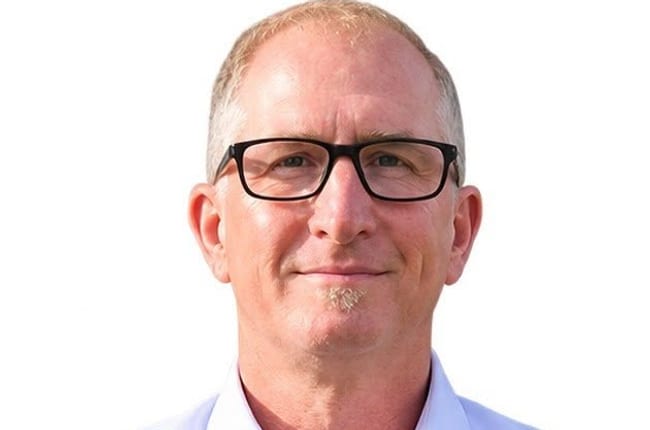
Today's profile is David McLeod, who is running in Welland. McLeod returned to the Rose City in 2004 to raise his family after spending seven years pursuing a corporate career. In 2010, he was elected to city council, motivated by a desire to help build a better future for his children and the community. David brings 29 years of combined corporate and small-business experience, including work in small-business and property management, along with 16 consecutive years on Welland City Council. He says this experience has given him an understanding of corporate business, local businesses, municipal government and Niagara Region.
What is the single biggest issue facing your municipality right now, and what is the first concrete thing you would do as mayor to address it?
So, I would suggest that the largest or most common one is how people feel about the property taxes. And the most concrete thing we can do, I guess, is 2 pronged. One is We need to do a service delivery review to find any savings possible so that our services are delivered as efficiently as possible for the public. And the other is we need to grow our industrial base, which gets the taxes off of the residents and onto industry, which is historically what the challenge has been in Welland. We've had some success, but that is the formula. Make sure Services are delivered efficiently, and we find additional revenue bases for our taxes.
Property taxes are a major concern for many residents. How would you balance keeping taxes affordable with the need to maintain roads, infrastructure and municipal services - and are you willing to raise taxes if you believe it's necessary?
I think part of it is through our infrastructure investment. And there is likely infrastructure that can be repaired, replaced, that actually reduces our operating costs. And that's actually helpful to the taxation. So that is those are the key, you know, the bring them to me first objectives as mayor is what can we invest in that reduces our overall operating costs? And so, to me, that is being the most responsible to the taxpayer. I would raise taxes. I would raise taxes cautiously and only if the benefit was truly in the interest of taxpayers.
Niagara continues to grow. How should your municipality handle new development and housing while making sure infrastructure and services can keep up with that growth?
That's a great question because almost every third or 4th door is asking about our infrastructure and whether or not we can handle it. And that tells me directly; we are not communicating this very well as a municipality. Those that we serve want to know about our capacity, and we need to share that with them. So first off, we need to determine where our capacity issues are, share it with the public, and ensure that we're investing in it to support the infrastructure and development. And an educated public is an understanding public. But right now, it would appear that we're not disseminating or providing that information very well. And the public is concerned. And we need to prove that we're addressing it or not addressing it and owning that as well as the initiatives to move forward and fix it.
What do you believe Niagara's municipalities and the Region should be doing differently together, and what would you personally do as mayor to improve regional cooperation?
I would suggest that there are some opportunities with mental health addiction and homelessness, that the municipalities in the region could be working closer together as well as with community partners in order to actually deliver some results, meaningful results, as well as securing public spaces for the general public. I think that is probably the number one thing that would suggest is needed. Also, when you look at growth projections, we need to ensure, similar to the last question, we need to ensure that when developments are being planned, that the regional trunk lines and traffic routes are consistent with those growth projections. Because if Welland's in line with growth, but the region is not, we're still underserved. And that's a challenge.
If elected, what is one thing you would change about how your municipality operates that residents would actually notice within your first year?
Yeah, so I'm about service. And our primary objective as mayor is to ensure that our residents feel served. I'm going to articulate and show exactly what our service objectives are. We're going to have a measurement associated with it. And we're going to be honest about whether we're meeting it or not, as well as the objectives to maintain or improve service to our citizens. And once the citizens are aware of this, they will know that they're being served better. Also, we need to move towards a better connection, more relevance as your local government. And people will know that when because of the amount of education and understanding, I will hope to administer through various departments, but clearly a better connection and understanding what service and what service levels we're achieving is what I hope to do in the first year.
Four years from now, what do you want residents to be able to point to and say, "That's what this mayor accomplished"?
Again, I need to go back to right now; it feels like we are disconnected as a municipality to our residents. So, I want residents to be able to say, our government really has it right. They are investing in our infrastructure that services new development. They're not neglecting our current roads and infrastructure in existing neighborhoods. We have a community that has a tighter bond now that we have introduced new communities within our original city boundaries. And so I guess that's really it, a sense of community, a sense of belonging and an understanding that the government is focused on them and delivering on what's important to them.
McLeod is one of eight candidates running for Mayor in Welland, alongside April Jeffs, Gary Graziani, Brandon Simon, Natashia Bergen, Graham Speck, Pat Chiocchio and David Clow.