

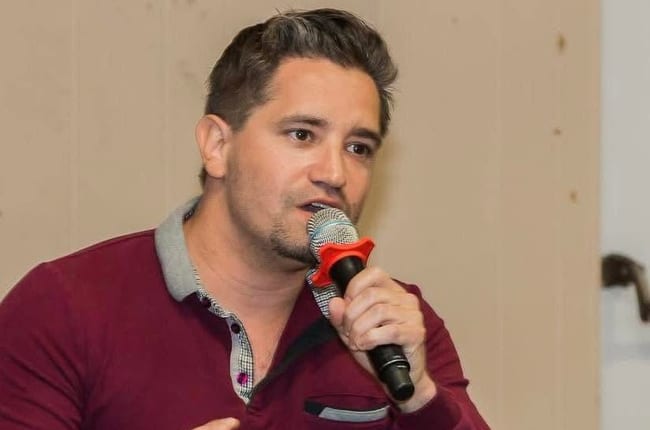
In the week leading up to the 2026 Municipal Election, we will be featuring profiles for candidates running for Mayor in Niagara's three largest municipalities - St. Catharines, Niagara Falls and Welland.
Today's profile is Brandon Simon, who is running to be Mayor of Welland. Simon is a Romanian orphan who grew up in the Aurora Village Co-op, who studied Child and Youth Care, Philosophy and Human Rights. He later went on to become a two-sport professional athlete, and a global tech CEO and entrepreneur managing products with more than 200,000 shareholders.
What is the single biggest issue facing your Welland right now, and what is the first concrete thing you would do as mayor to address it?
I think the biggest issues facing Welland right now actually come from the region. A big part of that is the ballooning police budget from homeless and drug use. The impact that has on housing values in our downtown core, the low GDP per capita and per household in Welland is contributing to a lack of commercial revenue. There are so many factors that are snowballing as a result of the lack of investment coming into Welland, where we're not competitive on a regional or provincial scale. It’s simply to do with lacking direction, marketability and the ability to attract young families to replace the aging population that is no longer working.
Property taxes are a major concern for many residents. How would you balance keeping taxes affordable with the need to maintain roads, infrastructure and municipal services - and are you willing to raise taxes if you believe it's necessary?
Yet again, it's not coming off of the city side. It's typically coming off of the ballooned regional budget. And the ballooning regional budget, over 70% of it's just police and community services. If that gets restructured and we can get the marine and border patrol footed to the provincial and federal government, we can make the homeless issue a federal issue and we can reduce the calls and central access to food and other sources in the downtown corridors, this region frees up like 20, 30% of its budget. We can actually service individuals on those things that you asked about, like roads and other infrastructure, such as transit, attracting capital, large scale events in a tourist destination, which obviously we lack that as well. It all stems from where the bulk of the money at the region's going to and how they're spending it.
Niagara continues to grow. How should Welland handle new development and housing while making sure infrastructure and services can keep up with that growth?
We've already exceeded our population target for 2030. So there's no point in actually continuing on that path, considering we're 8 to 12 years behind in our infrastructure, in particular like water and water pipes and everything else. So where we're at right now in Welland is they're trying to move the goalpost for a 2050 master plan. I disagree with that entirely. I think Frank Campion stood there with a $2 million check from the builders associations or whatever it was from provincial federal government and their program and I just I think that money came out of everyone's equity in their homes. We're building on the back end of properties, detached neighborhoods. We're putting semi-detached condo units. Those are devaluing people's homes while we're raising property taxes. So you asked before, how are we going to stop property taxes from increasing? Well, it's not a matter of people not willing to pay for their property taxes. You can go to New Haven, Connecticut and pay $35,000 property tax for a house. But people are happy about the local school that they're getting by moving there. They're happy about the services they're receiving. Welland people aren't happy with anything. So when you're talking about viability and paying taxes and livability, we're talking about infrastructure and access to amenities as well. So, if you're working in Mississauga or somewhere, because Welland has no jobs, and you've got to drive an hour and a half, two hours a day, you're spending 6 to $8,000 a year on gas alone. You're devaluing your vehicle at a rate incomparable to any other region where you have work, right? And you're able to drive somewhere within 20 minutes or even take a bus or a train. So I think when we talk about all these questions, they're also, we got to look at a macro perspective as well.
What do you believe Niagara's municipalities and the Region should be doing differently together, and what would you personally do as mayor to improve regional cooperation?
So there's no direction right now. Like they sent Bob Gale on a witch hunt to find efficiencies. And they came back with things like cutting urns for poor people. And then they realized there's actually a surplus in regards to that program because they get a bursary in return for it that actually is more than what they're spending. So like, it was absolutely outrageous to see at the region. I sat in those meetings and I sat in the council meetings in Welland City Hall. To see that there's absolutely no direction, and I think it starts with being able to balance the books, find a way to do things in a more productive manner, like having EMS on site in old age homes, for example. Like those are innovative ideas that are going to save us tens of millions of dollars. Right now, people fall on the floor. They're on the floor for four hours. They in some places in cases and you go and the EMS picks them up off the floor because there's liability for the staff if they do it. That's a charge on the system, and then they send a couple of fire trucks to go along with it. Like what are we paying for every one of those four or $5,000, right for each call. So it adds up. And if you do that regionally, we're talking big, big chunk of the budget. So when we go and we look for leadership in this region, we not only have an inefficient budget, but we have no direction. We should be a leader attracting American capital and business. We should have tons of sports teams right on the border. We should have the opportunity to put bums and seats all the way across from hotels to all venues. And we don't even have the venues or the hotels to do it in a lot of our cities. We're so behind the 8 ball on trying to figure out how to generate capital to Niagara and for so long, it was like Detroit attracting industrial work and stuff. When it all disappeared, look what's happened. You walk downtown St. Catharines or downtown Welland and parts of Niagara Falls, you're like, holy cow, what happened? Like is this the first world?
If elected, what is one thing you would change about how Welland operates that residents would actually notice within your first year?
First of all, Frank Campion right now is not a marketable individual. He closes the door, he’s by appointment only, doesn't take media, doesn't go to CBC radio, doesn't go on breakfast television, doesn't advertise the city, lacks speaking capabilities in public. There's no review system at the city for staff. There's no communication with residents on, hey, like you booked an appointment, did your problem get resolved? There's no process or streamline process, especially with technology today, to address the actual needs of residents. So they've just become apathetic and then they look for change within, oh, like we're going to have change. And then they get a ton of people come to their door telling them sweet nothings and then they end up with nothing because they didn't pick an actual platform. So when you look at my platform, mayorsimon.ca, I've got an entire economic model and roadmap and system that I want to put in place that's going to create the environment for people, not just referral based business, but economic growth in this city. I want to start the wheels on that. People say, well, what are you going to do in your first 100 days? It's like, the reality is, there's not a lot you can do in your first 100 days. I don't even think you start the job for a few months. So if anyone's saying they're going to do something in their first 100 days or address something, they're probably not even going to be in city hall on those days. You're going to have to get a learning process. I went into Frank Campion's office and we had a couple meetings and I said to him, Frank, I just want to learn like what's that notepad doing on your desk? Like, what are you doing with it? What's your system? How are you doing things right now? And how can I make it better? You know, and to me, I like to dissect things in that way, where the first little bit, I'm hoping Frank's going to stick around for a bit. I can kind of just learn, I can learn about, hey, what are you doing every day, Frank? How are you doing it? How are you managing your time? Because Frank told me a story, he walked up there and said, oh, Frank, I guess you're going to start and he had no guidance and he just walked in and had to figure things out on his own. And I think having that transition, healthy transition of power, and that's maybe not the sexy answer that people are looking for, but the healthy transition of power is super important because it's not about what he's doing wrong. It's about understanding what he's doing now and then figuring out how to do it myself in the more efficient way for myself.
Four years from now, what do you want residents to be able to point to and say, "That's what this mayor accomplished"?
Look, if I don't get elected, people are going to regret not having me in because they actually had a platform to vote on for the first time in history. If I do get in, I want people four years from now standing outside of my residence asking me to rerun. Because if you don't win by winning the election, you've gotten a four year sentence, like a jail sentence. You've got to find your way out of jail. If you get yourself out there, out of that prison for four years, and people want you in the streets, they want you present, they want you around, you've done your job. I think one of the best ways to look at it is having, I think it was the Texas Rangers games. The former president would go to those games and you'd see him without security. You'd see him with his wife. He was like 90 something years old and he'd be like, wow, like this guy can walk around anywhere he wants in Texas. No security, no slander, no issues because he's just loved. And I think that's a legacy. That's a legacy. People don't have to agree with everything you say or do. They're never going to do that. But the results should show for themselves.
Simon is one of eight candidates running for Mayor in Welland, alongside April Jeffs, Gary Graziani, Graham Speck, David Clow, Natashia Bergen, Pat Chiocchio and David McLeod.