

In the week leading up to the 2026 Municipal Election, we will be featuring profiles for candidates running for Mayor in Niagara's three largest municipalities - St. Catharines, Niagara Falls and Welland.
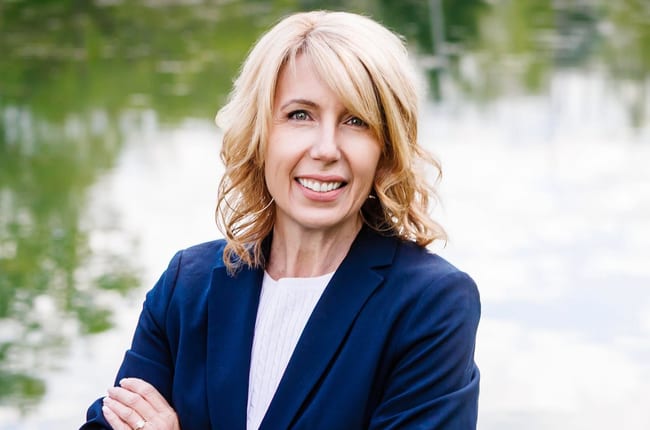
Today's profile is April Jeffs, who is running in Welland. Jeffs is the former Mayor of Wainfleet, having served two terms from 2010 to 2018. April is a lifelong Niagara resident, and has also served as Chair as Niagara Parks Commission, and currently works in Government Relations at Brock University.
What is the single biggest issue facing your municipality right now, and what is the first concrete thing you would do as mayor to address it?
I think when I hear people at the doors, a lot of it is about high property taxes. That's pretty much the first thing that people say when we knock on a door. So, if I'm fortunate enough to be elected, the first thing I want to do in the first 100 days is a line-by-line value-for-money audit. So that can give me and council, myself and council, a really clear picture of what the finances are. I do think that the money's there. I think it's just not being allocated properly. And then I think that we need to focus on growing our commercial tax base. A lot of the burden has fallen on residential taxpayers, and I think there are opportunities to grow the commercial tax base, particularly downtown. Downtown revitalization is part of my platform. I know we have some issues to address downtown, but I think we can work simultaneously on growing that commercial tax base. And we do have small and medium-sized manufacturing and industrial businesses. I've spoken with the Niagara Industrial Association, and I think there are upwards of 80 businesses. I think we need to expand on that with a real push in economic development, possibly trade missions, and working with our post-secondary institutions to attract investment and really work on creating jobs, but also using that tax base instead of putting everything on residential taxpayers.
Property taxes are a major concern for many residents. How would you balance keeping taxes affordable with the need to maintain roads, infrastructure and municipal services?
I think, again, that once you go through a value-for-money audit, I think that gives a much clearer picture. It definitely is a balance. I think the new development that's happening, the growth, and the infrastructure needs need to be paid for by that new development, while the existing taxpayers get what they need from the tax money that they're contributing. Because I've heard a lot of people, again, going back to the doors, saying that we're getting all this new development, but our taxes, those increases, are still relatively large. So, people feel forgotten. A lot of the older neighbourhoods have roads that haven't been touched in years. Some of them have said, like, 30 years. So it's about balancing that out. And a lot of us in the debate said growth needs to pay for growth and prioritizing what the important infrastructure projects are. And I know that roads and sidewalks are a big one when I'm out canvassing because people feel that they've really been neglected.
Niagara continues to grow. How should your municipality handle new development and housing while making sure infrastructure and services can keep up with that growth?
I think, again, that once you go through a value-for-money audit, I think that gives a much clearer picture. It definitely is a balance. I think the new development that's happening, the growth, and the infrastructure needs need to be paid for by that new development, while the existing taxpayers get what they need from the tax money that they're contributing. Because I've heard a lot of people, again, going back to the doors, saying that we're getting all this new development, but our taxes, those increases, are still relatively large. So, people feel forgotten. A lot of the older neighbourhoods have roads that haven't been touched in years. Some of them have said, like, 30 years. So it's about balancing that out. And a lot of us in the debate said growth needs to pay for growth and prioritizing what the important infrastructure projects are. And I know that roads and sidewalks are a big one when I'm out canvassing because people feel that they've really been neglected.
What do you believe Niagara's municipalities and the Region should be doing differently together, and what would you personally do as mayor to improve regional cooperation?
I think we have a really good opportunity with the province changing the structure of regional governance to just the 12 mayors. So I think it really presents an opportunity to work really cohesively with all the mayors. And I've said along the way during this campaign, I think we all need to recognize and understand each other's municipalities and what their needs and goals are, and work together and support each other. And I've used the example of the situation with homelessness here in Welland, but we know it touches other municipalities. And I've said that all the mayors really need to work together. Even if maybe they aren't particularly dealing with that situation as much in their municipality, they need to recognize how it's affecting Welland, Niagara Falls, and St. Catharines. We need a real coordinated effort and unified front in trying to address it, particularly when it comes to any advocacy at the provincial level to assist with these issues. So I think it's a great opportunity, with a kind of fresh, new governance structure, to really work together at the regional level.
If elected, what is one thing you would change about how your municipality operates that residents would actually notice within your first year?
I think I really want a customer-focused and more open approach because I've heard from residents. I had a resident the other day who renews his business licence every year, and he said it's complicated and he gets kind of shuffled from one area to another. And I think the culture of an organization starts at the top, and I think that starts with the mayor and council. I really want to make council meetings and the city more accessible, and really work on the partnerships and relationships with community organizations. We have some fabulous festivals. We have great organizations that do a lot of community work and help people in need. And I just feel like everybody's kind of working in silos. And I believe that's kind of the responsibility of the city and the mayor, to bring everybody together and to really be open. So that's something that I want to work on right away, and I think that's something that will be noticeable in the first year.
Four years from now, what do you want residents to be able to point to and say, "That's what this mayor accomplished"?
I would love it if, if I'm elected, myself and council would be able to really bring the community together. But also, a really big part of my focus is the downtown. So it would be fantastic if we could really help the people who are struggling in the downtown through provincial advocacy to get more supportive housing and more treatment. I'm the chair of Arid Recovery Homes, so expanding things like that, and then being able to work on making some really significant investments in it and getting people to invest and attracting them to the downtown. I would think we really did something great if, in four years, people would point to that and say, yes, we've seen noticeable improvement in our downtown, because that benefits the entire city.