

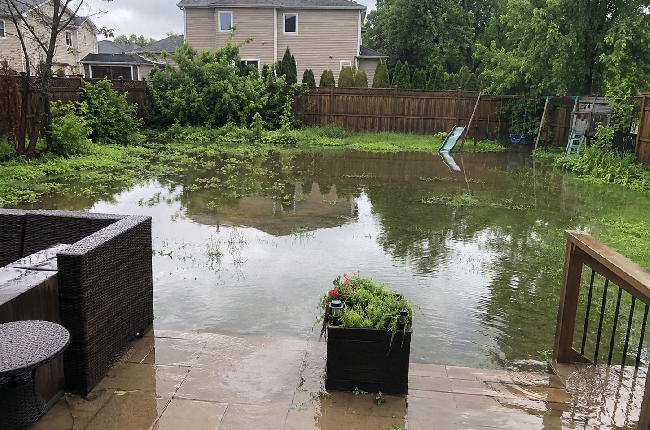
It has been an extraordinary stretch of weather across Niagara.
Nearly 300 millimetres of rain, that's just about a foot, fell in Niagara in just a week and a half, flooding homes, businesses and roads, and leaving many residents wondering what comes next.
From St. Catharines and Lincoln to Niagara-on-the-Lake, the cleanup is underway, but for many the damage doesn't end when the water recedes.
NiagaraDailyNews.ca taking a closer look at what happened, what comes next - and how Niagara can help neighbours who are struggling in the aftermath.
St. Catharines has been among the hardest-hit communities. Mayor Mat Siscoe has seen the impact firsthand, including at his own home.
He says some of the scenes he's witnessed first-hand from the flooding doesn't seem real.
Siscoe says the amount of rain has put an enormous strain on infrastructure that simply wasn't designed to handle this much water in such a short period of time.
That said, St. Catharines isn't alone.
In Niagara-on-the-Lake, flooding has created a different set of challenges, affecting homes, roads, businesses and agricultural areas.
Lord Mayor Gary Zalepa says the community is also dealing with the aftermath of an unprecedented amount of water.
While the flooding may look different from one community to the next, the question being asked across Niagara is the same: How did we get this much rain?
Environment Canada Senior Climatologist David Phillips has been tracking the rainfall and the weather systems responsible for it. He says there's a reason Niagara say such an extraordinary amount of precipitation over such a short period of time.
Mixed with the humid air that's been around the region for most of the summer, the rainfalls have come in bunches.
Even so, Phillips adds that two major storms this close together is unprecedented.
That extreme weather hasn't stopped at the borders of St. Catharines and Niagara-on-the-Lake. Niagara Falls has also been dealing with the effects of the heavy rainfall.
While not issuing a state of emergency like Lincoln and St. Catharines, Mayor Jim Diodati says they've also been setting up programs to help residents that may have seen their homes flooded.
For homeowners dealing with flooded basements and water damage, though, the weather explanation only goes so far.
The immediate question becomes: what do you do now? That's where insurance can become complicated.
CAA insurance expert Elliott Silverstein says homeowners should be documenting the damage and contacting their insurance company as soon as possible, and if you're renting, make sure you've got tenant insurance.
While insurance may help cover some of the damage, someone still has to physically get those homes cleaned up and repaired.
That's where local contractors are seeing the reality of the flooding firsthand.
Local contractor Travis Delaney of Newfound Construction Ltd. has been working with homeowners dealing with water damage. He says tackling the water quickly is key to avoiding things like mold growing in places you can't see it.
Homeowners who are able to make repairs want to make sure this can't happen again.
Rob Eden of All Dry Waterproofing works with homeowners on ways to reduce the risk of future flooding. He says there are steps people can take, some relatively simple, others requiring a much larger investment, to protect their homes from heavy rainfall.
When rainfall events overwhelm entire communities, the conversation quickly becomes one about infrastructure, and who is responsible for helping pay for it.
St. Catharines MP Chris Bittle says governments at every level have a role to play in helping communities recover from events like this, and preparing for the next one.
Even as governments and homeowners work through the physical cleanup, there is another impact that can be easy to overlook.
For some Niagara residents, flooding doesn't just mean repairing a basement. It can mean choosing between paying for those repairs and putting food on the table.
That's where FEED Niagara comes in.
The organization works with food banks across Niagara, helping make sure people have access to food when they're struggling to make ends meet.
And after a week and a half of extraordinary rainfall, there is concern the financial impact of the flooding could put even more pressure on people who were already struggling.
FEED Niagara manager David Vandersteen says that's why community support is so important right now.
FEED Niagara works with 10 food banks across the region in every municipality. As Niagara begins the long process of recovering from the flooding, Vandersteen says helping your neighbours can be as simple as making a donation.
Some local organizations have already stepped up, including First Ontario Credit Union, who made a donation of $10,000 Wednesday morning.
CEO Lloyd Smith says being there for the community when it needs it is something every business should do.
Smith adds that he is also encouraging employees and members of the credit union to make donations if they're able.
The rain may have stopped, but for many Niagara residents, the recovery is only beginning.
Homes still need to be repaired, businesses need to reopen, and families facing unexpected costs may need a little extra help getting through the weeks and months ahead.
91.7 Giant FM, New Country 89.1, NiagaraDailyNews.ca and all the other radio stations from across the Niagara Region are raising money for FEED Niagara during this Day of Giving to help support the food banks serving communities across the region.
You can make a donation to FEED Niagara through the Niagara Community Foundation here.
(Written by: Matt Latour)